

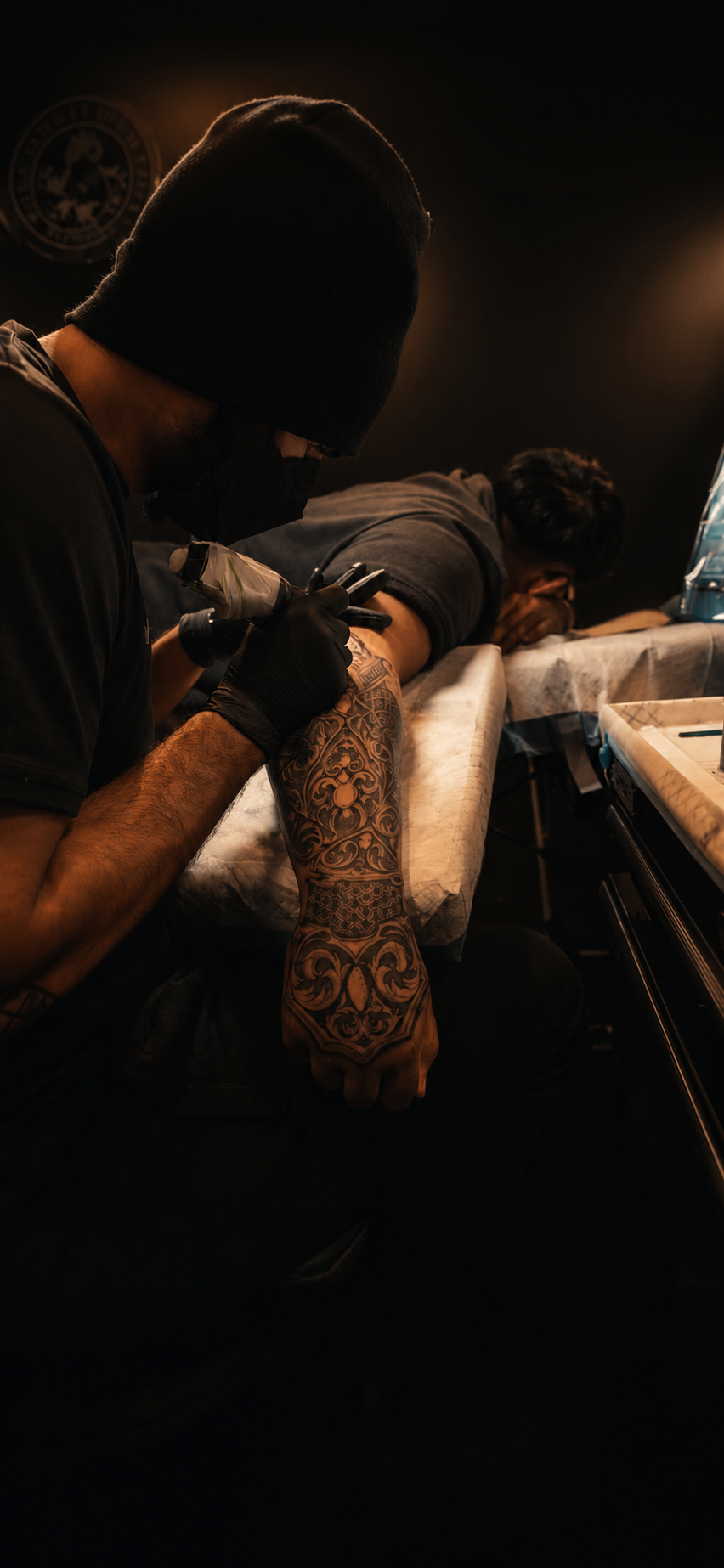
How you heal it is just as important as how we built it.
15 years of fine art tattooing taught me one thing most clients don't expect — the healing process is where great work is either protected or destroyed.
This page exists because I care what your tattoo looks like in 10 years, not just the day we finish it.
Follow these instructions. Protect your investment.
Your Tattoo Doesn't End When You Leave the Chair.
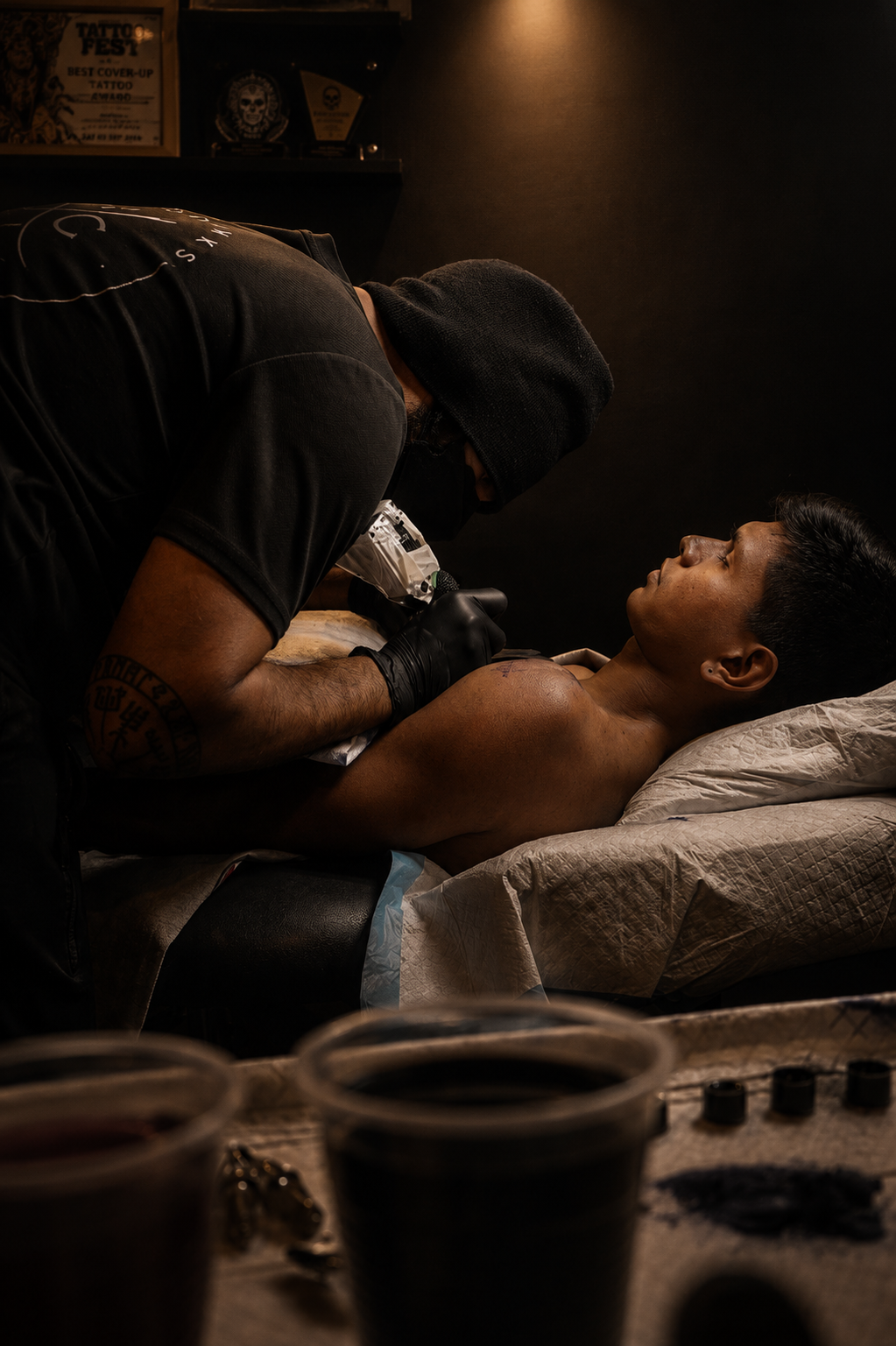
🩹 BANDAGE AFTERCARE
You will be required to maintain this bandage over your fresh tattoo for the next 8 days.
During this time, you must try your best to avoid sweating unnecessarily (no sports or gym) as well as excessive water (no beach or swimming) while wearing you bandage.
You will notice a build-up of fluids under your bandage, this is fine. It's the body's way of hydrating and healing your fresh tattoo.
You will notice a bit of distortion, especially on the finer details of your tattoo, don't panic. Your tattoo will heal up just fine. It only appears this way because of the fluid build-up.
REMOVAL
From one corner, peel the bandage back against itself in the direction of hair growth.
If it's difficult to remove, keep the bandage under warm running water during this removal process. The warm water will soften the bandage and aid the removal.
After the bandage is off, wash the previously covered area with warm soapy water (unscented soap of any brand) to clean any remaining fluids before patting it dry with a clean paper towel. You will then allow this area to air out for 20–30 minutes.
If there is any dryness, be sure to pat on a thin coat of coconut oil (as often as needed) to hydrate the skin and ease any itchiness you may experience over the next week or so.
My Approach
I come from a background in Art and engineering. That means when I look at your skin, I'm not just seeing a canvas — I'm seeing living tissue that needs to be respected, both under the needle and through the healing process.
Every aftercare protocol I give you is deliberate. Nothing is generic. Nothing is guesswork.
🖤 TRADITIONAL AFTERCARE - Healing without a bandage
Step 1 — Clean tattoo 12–24 hours after leaving the studio. Keep dust and bacteria away from the tattoo in this initial phase.
Step 2 — Wash with warm antibacterial soapy water (as hot as you can comfortably handle). This opens the pores for thorough cleansing and softens any plasma so it washes away cleanly.
Step 3 — Pat dry with a clean towel. Never rub. Do not rub the tattoo at any point during the healing process.
Step 4 — For the first 3–5 days, apply no ointment. This allows the ink to settle properly under the skin before any scabbing begins.
Step 5 — Once scabbing starts, apply a thin layer of extra virgin coconut oil. This adds moisture and eases itchiness. A little goes a long way.
Step 6 — Never scratch. Never pick at scabs. Allow all scabs to fall off naturally. Take precautions while sleeping, working, and bathing.
Step 7 — Avoid direct sunlight, beaches, pools, and any soaking in water. Excess moisture invites infection. UV rays dull the tattoo's appearance permanently.
Step 8 — Do not use Vaseline or rubbing alcohol at any point.
Step 9 — During scabbing, avoid prolonged contact with soap and water.
Your Responsibility
I do my part in the chair. This is your part after. Follow it and your tattoo will last a lifetime.
Your Art
The design we built together deserves to heal the way it was made — with precision and intention. These instructions protect every line, every shade, every detail.